Dressmaker Customers and Commissions
Occasion, style tags, and budget decide the dress. Prestige and the newspaper decide what unlocks next.
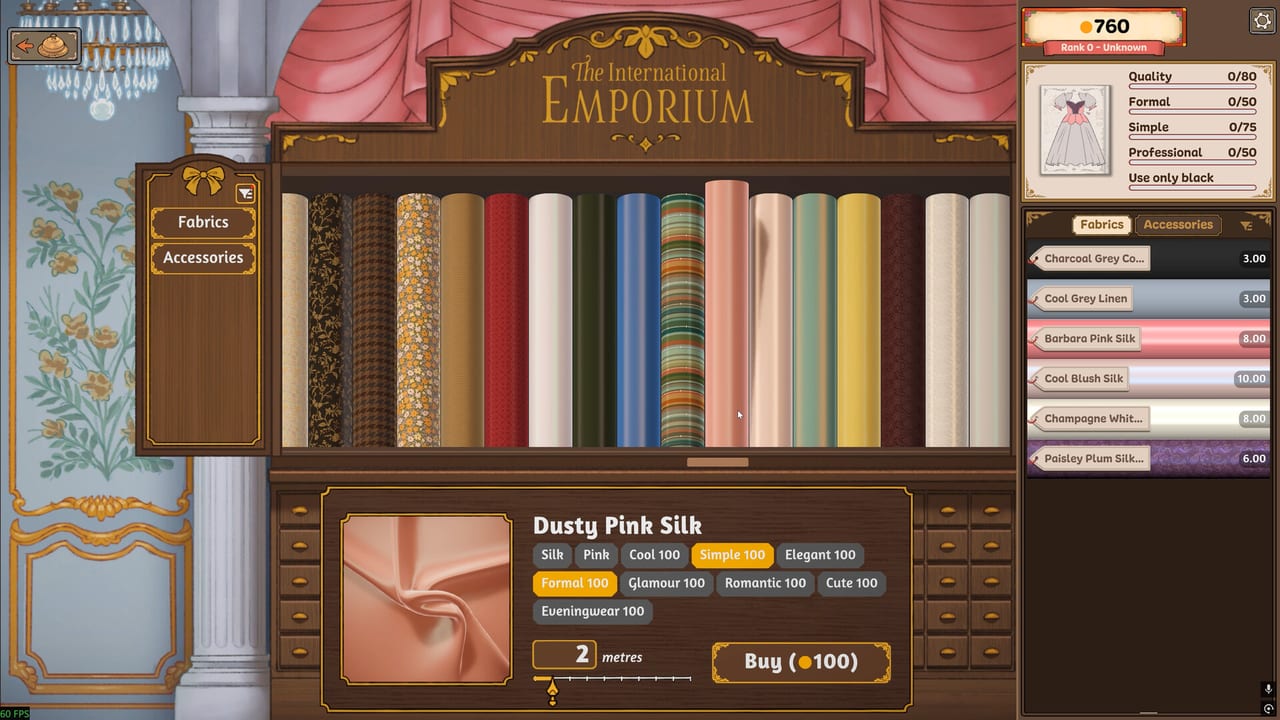
Townsfolk do not walk into the Dressmaker shop to admire your favourite colour. They walk in with a date on the calendar, a taste, and a purse. Occasion, style, and budget are the brief. Everything else — grain, stitch, bows — is how you execute that brief. This page is about reading the counter correctly so the sketchbook and the fabric ranking have something honest to work from.
Cozy Lives frames the fantasy as satisfy or sabotage. The trailer line is real flavour. The scoring loop is not a prank simulator. You can send a disastrous dress. Reputation, coin, and the newspaper move when you match the request. Play sabotage on a throwaway file after you understand prestige, not on the first library job.
Occasion, style, and budget
Occasion is the event: work, library, ball, opera, a quiet afternoon, something ceremonial. It tells you formality and how much gleam is allowed. A work-appropriate library visit wants coverage, modest drape, and fibres that look employed. A ball wants glamorous or elegant volume and cloth that catches light.
Style tags sit on top of occasion. Cute, Elegant, and Professional are the tags you will see early. Cute can tolerate playful skirts and brighter samples. Elegant wants line and sheen. Professional wants restraint. If the tag says Professional and you send a ruffled Cute confection, the style match fails even if the stitch is 100%.
Budget is the third rail. The first library-job client often lands near 300 coin. That number buys cotton or linen, not a velvet pile. Ball clients bring larger purses; 1000 is a useful example for glamorous or elegant work. Spend under the ceiling. Overspending can miss the budget read even when the dress looks “better.” Underspending on a ball by sending day cotton looks like you ignored the occasion.
The occasion dress guide collects event-by-event notes. Use it when two briefs feel similar and you need a firmer formal-versus-day split. Come back here for the money and prestige layer.
From counter to sketch
Do not open the fabric shop first. Follow How to Play only after the brief is clear. Open the sketchbook and pick a silhouette that already looks like the tag. Bodice, neckline, sleeves, skirt, collar should read as the occasion before a single metre is cut. Pin samples that the purse can survive. Draft only then. Getting Started walks that discipline on day one; this page is why the discipline exists.
If the client wants Professional and the only silhouette you love is a ball skirt, love it later. Steam’s 150+ pieces will give you more gothic, seasonal, and experimental options than Prototype 0.5.5. The prototype’s smaller closet is a feature for learning tags, not a reason to ignore them.
Prestige, coin, and the newspaper
A clean delivery pays coin and reputation. Prestige is the long bar that unlocks more of the emporium: extra fibres, notions, and silhouettes as Cozy Lives opens the full 450+ fabrics and 350+ accessories in the Steam shop. You do not grind prestige by sabotaging townsfolk for a joke screenshot.
The newspaper is the town’s memory. It reports what you made and how it was received. Early write-ups are a feedback channel: too flashy for the library, too plain for the ball, perfectly employed, a local sensation. Read them. They are closer to a design review than to flavour text.
Coin spent on wasted cuts is coin you do not have for the next silk. That is why leftover bolts matter on the cutting table even though this is the customer page. A client will not thank you for a bankrupt shop.
Off-the-rack as a teaser
Story commissions are the spine: about 35 hours in the full game if you exclude off-the-rack dresses. Shop-window selling is a full-game focus. Between story jobs you will be able to design pieces, put them in the window, and sell without a named brief. Prototype 0.5.5 does not stand in for that economy. Treat window selling as a Steam-shop reason to keep leftover fibres and to practise silhouettes the current client did not ask for — after the named brief is delivered.
Measurements and mannequin sizing are also a Steam-version feature. Prototype fitting is thinner. If a full-game client’s measurements change the mannequin, the brief did not get easier; the dress has to fit that body as well as that taste. Until 21 September 2026, practise tag-and-budget literacy on itch, then expect the mannequin to matter more at launch.
When two clients queue in your head, serve the smaller purse first. A 300-coin professional dress that hits all three reads funds the 1000-coin ball. The reverse order often ends with a glamorous leftover pile and no cotton for the librarian.
Frequently Asked Questions
Quick answers for launch week, the prototype, and the sewing loop.
What three things does every client request include?
Occasion, style, and budget. Honour all three in the sketchbook before you buy cloth. Pretty fabric that misses a tag still fails the delivery.
Should I sabotage townsfolk like the trailer jokes?
You can, as a joke on a spare file. Prestige, coin, and the newspaper reward matching the brief. Day-one shops should deliver.
Why is the first job so cheap?
The library-style client often budgets around 300 and wants professional, work-appropriate clothing. It teaches restraint. Walk it in Getting Started before you take a ball.
How much do ball clients pay?
More than workwear. A 1000-coin example is a useful mental cap for glamorous or elegant briefs. Check the on-screen purse, not this example, when the number differs.
What is off-the-rack selling?
A full-game shop-window lane outside story commissions. It is a Steam focus, not a complete prototype system. Story length of ~35 hours excludes those extra dresses.
Where do I pick fibres for a brief?
Match formality and purse on the fabric ranking. Cotton and linen for professional day work; silk and velvet for high-budget nights. Event splits are on the occasion dress guide.