Dressmaker Off the Rack Shop
Hang finished dresses in the window, sell for coin, and keep story commissions on their own clock.
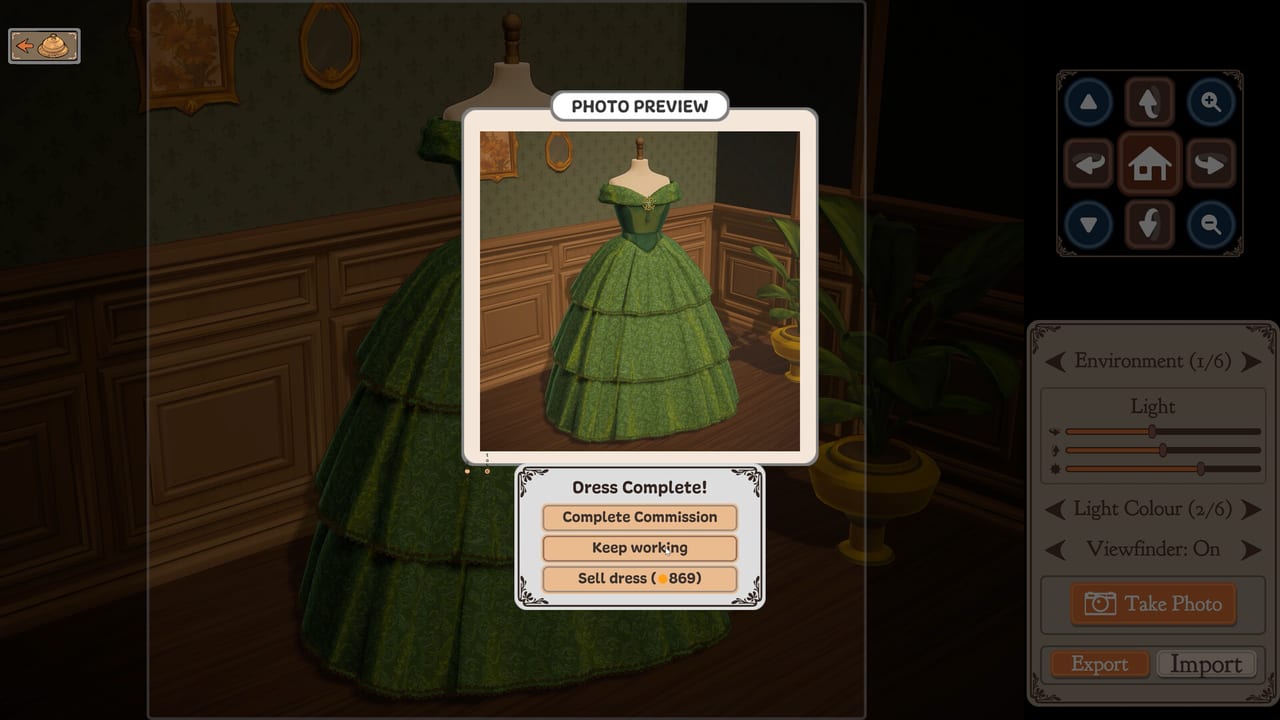
Story commissions are the named tickets: a townsfolk walks in, you match occasion, style, and budget, you deliver, the newspaper talks. Off-the-rack is the other till. You finish a dress with no brief attached, put it in the shop window, and wait for someone to buy the object rather than the promise. Cozy Lives has been clear that the about 35-hour story figure for the Steam shop excludes those extra dresses. This page is the window lane: how it differs from a complete-commission payout, how reputation and ready-to-wear pull in different directions, and why Prototype 0.5.5 will not teach you the finished economy.
The Steam game is still upcoming on 21 September 2026. Price sits at 14.99 USD with regional pricing and a 10 percent launch discount, per the 7 September 2026 news. Content is complete; leftover work is bugs and post-launch. Off-the-rack is part of that finished shop, not a post-launch maybe. Prototype 0.5.5 remains commission-first. Do not hunt a hidden boutique menu in the itch zip and then call the studio a liar when it is missing.
Shop window versus the named brief
A complete-commission is a conversation. The librarian asks for professional cotton near 300 coin. You tape if Steam has given you a tape, you sketch, you cut, you sew, you hand it over. Coin and prestige move because you answered a person. The window is a display. You decide the silhouette, the bolt, and the notions, then you price the object for whoever walks past the glass.
Example, stated as a habit rather than a leaked formula. After a library ticket, you have leftover linen and a modest bodice you already trust. Completing another named commission would mean waiting for the next townsfolk. Selling that leftover as a ready-made day dress for coin keeps the till moving between story beats. After a ball ticket, a second silk gown in the window is a different bet: higher materials, narrower buyers, more reputation risk if it looks like you ignored the town’s actual calendar.
Do not treat the window as a dump for failed commissions. A dress that missed a brief is not automatically a product. If the grain is wrong, the stitch wandered, or the fit would fail a mannequin, the glass will not launder the score. Hang work you would sign. Use Customers and Commissions to remember what the town actually wears, then design a second piece for the street rather than for a ghost client.
Reputation versus ready-to-wear
Bespoke work builds the newspaper story: this shop understands the opera, this shop dressed the library without velvet. Ready-to-wear builds stock and cash. Those two can fight. A window full of Cute picnic dresses while every story beat is asking for Professional workwear teaches the town the wrong lesson. A window full of velvet while the street wants linen makes you look rich and unavailable.
Use the fabric ranking the same way you would for a brief. Cotton and linen for daylight stock. Wool when the weather in your head is cooler. Silk and velvet as scarce night pieces, not as the entire pane of glass. The Steam catalogue targets 150-plus pieces, 450-plus fabrics, and 350-plus accessories. That is a playground. It is also how a window becomes a costume trunk if you hang one of everything.
Fit still matters. Measurements and Fit is the Steam-side reminder that a default mannequin is not a size chart. A ready-to-wear dress has to close on someone. If the full game exposes sizes in the window, label honestly. If it only exposes a look, sew with ease rather than a painted-on bodice that only fitted your last story client.
Prestige from story tickets still unlocks the emporium. Do not starve the campaign to tend the glass. The 35-hour spine is the campaign Cozy Lives priced. The window is overtime you choose. Players who only want the story can ignore the pane. Players who love leftover bolts will live there between named jobs.
Why 35 hours excludes off-the-rack
Official launch copy (7 September 2026, after the August Tea notes already called content complete) describes about 35 hours of story commissions excluding off-the-rack dresses. That sentence is a length claim, not a dare to grind the window until a clock hits 35. If you sew stock for a week, your personal hours go up. The campaign does not get longer. Quote the studio the way they wrote it: story length ignores the extra dresses.
That also means completionists and skippers will have different save files. One player delivers every named townsfolk and never dresses the glass. Another player runs a boutique between beats and still finishes the same credits. Both are inside the design. Neither should call the other wrong on 21 September 2026.
Prototype 0.5.5 will not settle the argument. The itch loop is a short, tactile class in grain and the red follow-dot. Window selling is a full-game focus documented in Tea posts, including measurements and mannequins landing in the same year of work. Use 0.5.5 to learn leftover discipline so Steam stock is not panic-cut silk. Use Steam for the actual pane of glass.
Stock habits that survive launch
Keep a mental rail of three window looks: a professional day dress, a garden or everyday piece, and one evening option you can actually afford to leave unsold. Rotate when a story beat changes what the town is talking about. Recut from leftovers before you buy a fresh velvet bolt “for the window.” The cutting table does not care whether the piece was destined for a librarian or for the glass; green outlines still cap quality.
Price in your head against the last brief you saw, not against a fantasy boutique. If named clients arrive with 300-coin workwear purses, a 2000-coin window gown is decoration. If ball tickets have been paying near 1000, a modest silk day dress can sit as an impulse buy. This wiki will not invent a Steam price slider. It will tell you to watch the till you already know.
When the pane is empty, sew cotton. When the pane is noisy, stop and take a named ticket. The cat does not care which lane you chose. The newspaper does. Hang work that would survive a real body, a real grain line, and a real street, then go back to the next person who actually asked for a dress.
Frequently Asked Questions
Quick answers for launch week, the prototype, and the sewing loop.
Is off-the-rack selling in Prototype 0.5.5?
Not as a finished shop-window economy. The itch loop is commission-first. Window selling is a full-game focus for the Steam shop planned on 21 September 2026.
Why does the 35-hour figure ignore window dresses?
Official launch copy counts story commissions only. Extra off-the-rack pieces are optional overtime. Sewing stock does not make the campaign longer.
Should I hang failed commissions in the window?
No. A missed brief is not automatically a product. Grain, stitch, and fit still show through glass. Hang work you would sign.
Does ready-to-wear use the same fabrics as commissions?
Yes. Rank bolts on the fabric ranking the same way. Cotton and linen for daylight stock; silk and velvet as scarce night pieces, not the whole window.
Do window dresses need measurements?
A ready-to-wear piece still has to close on a body. Read Measurements and Fit so a default mannequin does not become your entire size chart.
Will tending the window replace story prestige?
Do not count on it. Named tickets still drive the newspaper and unlocks. Use Customers and Commissions as the spine, and the glass as a second till.