How to Play Dressmaker
The full commission loop in order, from the counter request to quality, style, and budget scores.
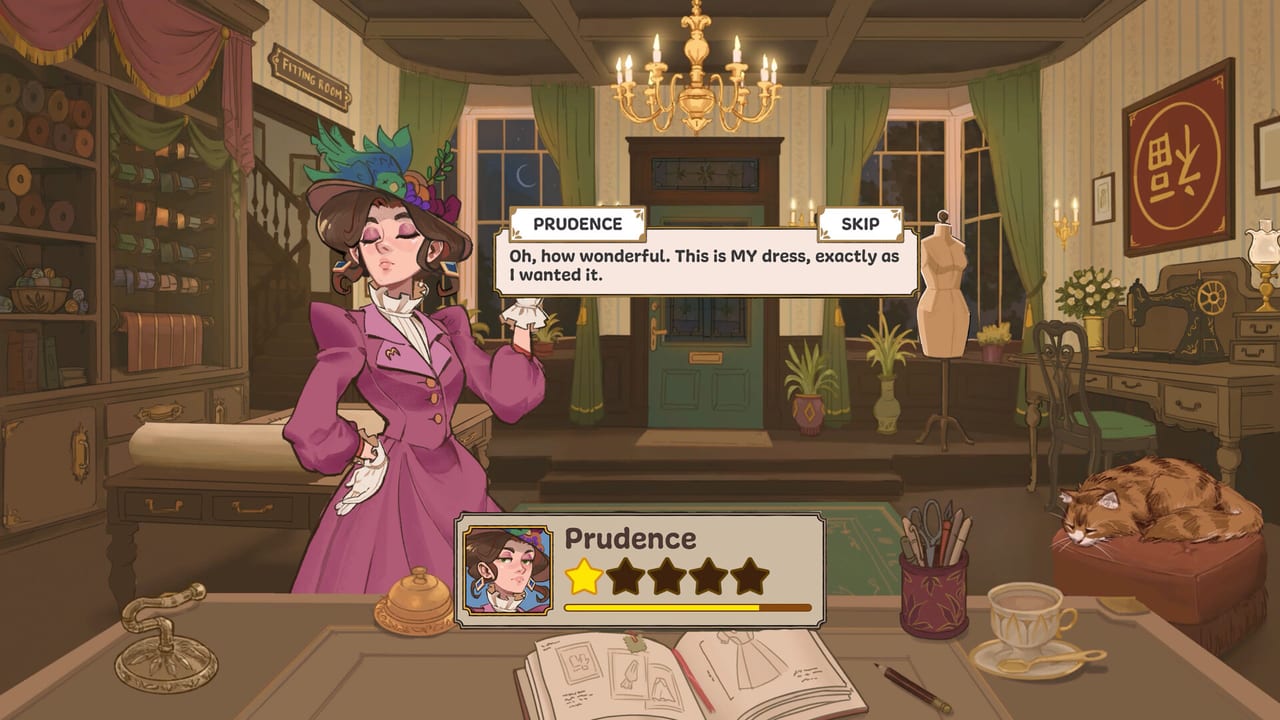
Every Dressmaker commission is the same sequence with different taste and money. Skip a station and the score tells on you. This page is the ordered loop for Prototype 0.5.5 and for the Steam shop planned on 21 September 2026. Mechanics below are what you can practise now. Catalogue size, measurements, and off-the-rack selling are called out when they belong to the full game only.
If you have not downloaded anything yet, use Getting Started first. If a single station is already failing, jump to How to Sew or Cutting Patterns instead of rereading this whole loop.
1. Hear the request
A client arrives with three constraints that matter more than your favourite colour: occasion, style, and budget. Occasion tells you whether the dress is for work, a library afternoon, a ball, or another date on their social calendar. Style tags such as Cute, Elegant, and Professional tell the sketchbook which silhouettes will read as a match. Budget is a hard ceiling. A 300-coin library brief cannot carry a velvet opera gown. A ball client with a 1000-coin example purse can, and will notice if you send cotton.
Listen before you sketch. The customer guide is the long version of this station, including prestige, the newspaper, and why the sabotage joke is not how the shop earns.
2. Sketch, then pin fabric samples
Open the sketchbook and build a silhouette from bodice, neckline, sleeves, skirt, and collar. Colour panels so you can see contrast before you spend coin. Pin fabric samples onto the drawing so the later shop trip is a shopping list, not a guess. Style tags on the page should agree with the brief. Draft the pattern only after the drawing would satisfy the client on paper. Sketchbook and Design breaks down each slot and the sample pins.
3. Buy cloth you can actually cut
The fabric shop sells cotton, linen, wool, silk, and velvet in the builds players have now. Lace and sequins expand in the full game. Buy metres against the pattern, not against a fantasy stash. Cheap natural fibres carry professional workwear. Silk and velvet belong on glamorous or elegant nights. Check the fabric ranking if you are unsure which bolt reads formal. Keep leftover lengths; they are inventory, not trash.
4. Cut on grain, pack like a puzzle
On the cutting table, every piece carries a grain-line arrow. Rotate until that arrow is horizontal and the outline turns green. That green means the piece is on grain. Bias (a diagonal grain) is a valid advanced choice for drape, not a beginner accident. Pack pieces like Tetris so waste stays low enough that leftovers can fund the next sleeve. If a piece is wrong, recut from the remaining bolt rather than sewing the mistake. Grain misalignment caps quality even if the later stitch line is perfect. Details live in the cutting guide and the quality checklist.
5. Sew the marching-ants line
The sewing machine shows a dotted, marching-ants seam and a red follow-dot. Keep the dot on the line. Mouse click-drag to push fabric, or hold Space and steer with arrows. There is a speed limiter; racing the curve is how 100% becomes 30% in a second. Release to pause. Corners want less speed, not more confidence. If a seam is ruined, restart that seam rather than hoping accessories will hide it. The sewing guide is the mechanical manual for momentum, contrast on light cloth, and twitchy-hand workarounds.
6. Accessories, then the counter
Buttons, bows, lace trim, and appliqué go on after the garment exists. Match the brief. A library client does not need a ball’s worth of sequins, and a ball client will look underdressed without some gleam. Do not let trim fight the style tags you already claimed in the sketchbook.
Deliver for three reads at once: construction quality, style match, and budget. Coin and reputation move when those three agree. The newspaper then tells the town what you made. In the Steam shop, off-the-rack pieces in the window become a second income lane outside story commissions. That lane is a full-game focus, not something to expect as a complete system in 0.5.5.
A sample first loop
Take the common library job at about 300 coin, professional tag. Sketch a modest bodice and sleeves, pin cotton or linen, draft, buy a short length, cut every piece to green, sew slowly, add small buttons, deliver. Bank leftover metres. Pet the cat. Only then open a glamorous brief. That order is how you learn the loop without lighting the shop’s cash on fire. When a score still looks wrong after a clean-looking sew, run the quality checklist before you blame the machine: grain first, stitch second, taste third, purse last.
Frequently Asked Questions
Quick answers for launch week, the prototype, and the sewing loop.
What is the Dressmaker gameplay loop in order?
Request (occasion, style, budget), sketchbook, fabric shop, cutting table, sewing machine, accessories, then delivery scores. How to Sew and Cutting Patterns are the two stations that most often cap the result.
Can I skip cutting and only practise sewing?
You can rush the table, but a grain mistake caps quality no matter how clean the stitch is. Keep the green outline rule from the cutting guide even on practise dresses.
Where do I check style tags?
They start on the client brief and must be honoured in the sketchbook. Cute, Elegant, and Professional are the tags to watch on early jobs.
Is off-the-rack selling in the prototype?
Shop-window selling is a full-game focus for the Steam shop planned on 21 September 2026. Prototype 0.5.5 is built around commissions. See Customers and Commissions for how deliveries currently pay.
What should I do if quality drops in the last seam?
Pause, restart that seam, and slow down. Quality falls fast off the line. Use the quality checklist and the sewing guide before you recut the whole dress.
Which fabrics fit a cheap professional brief?
Cotton and linen. Save silk and velvet for higher-budget elegant or glamorous occasions. The fabric ranking is the shopping cheat sheet.