Dressmaker Fabric Types
Five families, grain versus bias, and when a cheap bolt beats a luxury one.
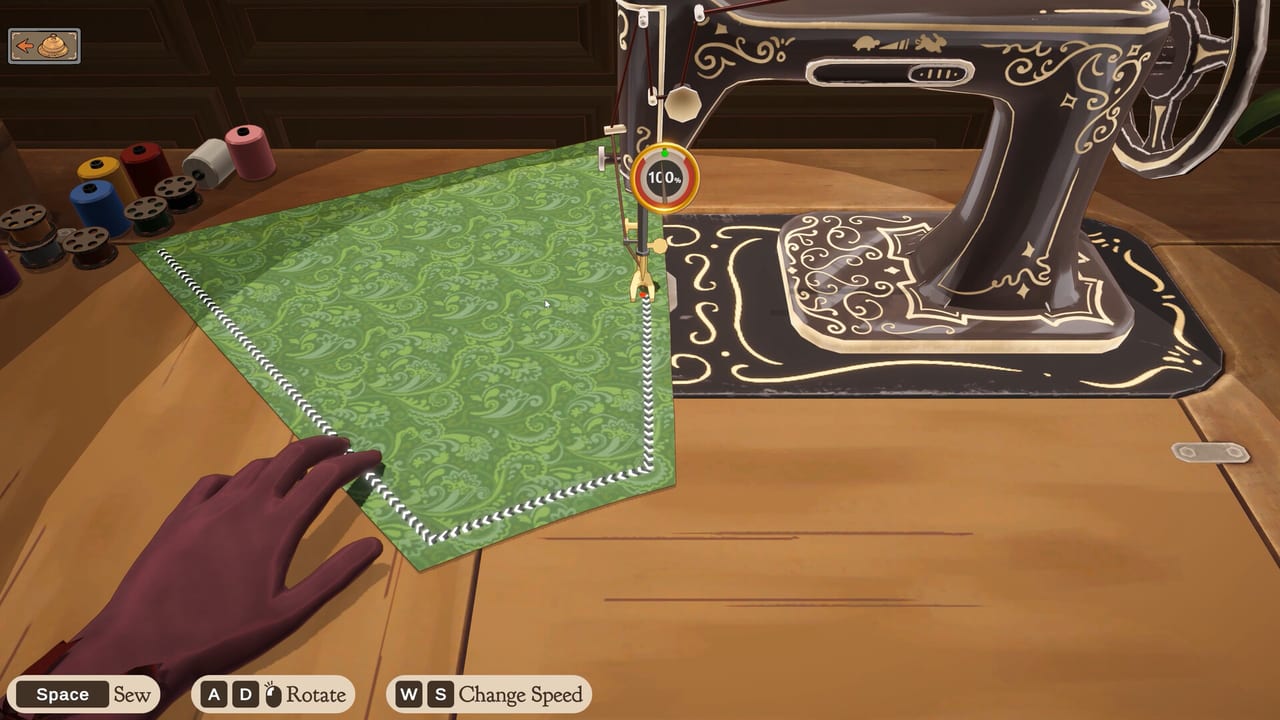
Dressmaker’s shop is built around five fabric families you can already handle in Prototype 0.5.5: cotton, linen, wool, silk, and velvet. The Steam catalog planned for 21 September 2026 adds many more colorways plus lace and sequin surfaces, but the families do not change. Learn how each bolt hangs, how it reads in daylight versus candlelight, and when to cut on grain versus bias. Then spend coins on purpose.
This page ranks fabrics as player advice. There is no official S-tier dump. Clients care about occasion, budget, and whether the finished dress looks like it belongs on their calendar. Cross-check every pick with the occasion dress guide, the customer guide, and the cutting guide. Decorations after the sew are covered on accessories and notions.
Grain versus bias before you buy
Grain follows the warp of the cloth. Pieces cut on grain keep their shape, sit cleanly on a work dress, and forgive small sewing wobbles. Bias sits at 45 degrees to the grain. Bias pieces drape, cling, and show every mistake. Silk evening hems love bias. Library cotton almost never does.
On the cutting table, rotate each pattern piece until the grain arrows sit the way the job needs. Wait for a green outline before you commit the scissors. A luxury bolt cut off-grain still looks cheap on the mannequin. The quality checklist is the last gate if hang still feels wrong.
Cotton — casual and work, matte
Cotton is the shop’s everyday workhorse. It reads matte, takes printed or plain color without shouting, and matches library, office, and “just a dress for town” tickets. Rank it S for everyday and work, A for garden parties if the print is light, B for daytime fundraisers, and C or lower for balls and opera.
Buy cotton first. It is the bolt you can afford to miscut while you learn the sewing loop. White pearl buttons on a simple cotton bodice can lift a librarian commission without pretending it is silk. Do not put heavy velvet-style lace on cotton workwear; the occasion clash is louder than the stitch quality.
Linen — relaxed and summer, textured
Linen looks textured and a little wrinkled in a way players read as summer air. Rank it S for garden parties, A for everyday heat, B for casual fundraisers, and C for winter professional tags. It is a poor opera cloth unless you are deliberately underdressing someone.
Cut linen on grain for shirts and day skirts. Bias linen can collapse and look unfinished. In the sketchbook, pair linen with soft florals and skip high-contrast sequin thinking. If a client mentions a lawn, a picnic, or a bright afternoon, linen should be in your hand before silk is.
Wool — professional and winter, dense
Wool is dense. It holds structure, reads as competence, and suits cold months and serious rooms. Rank it S for professional and winter work, A for daytime fundraisers, B for library clients who want gravitas, and C for garden parties (too heavy) and most balls (not enough sheen unless the invite is conservative).
Wool rewards grain cutting. Bias wool fights you and wastes a costly bolt. Keep decorations modest: small buttons, little or no lace cascade. A wool dress with clean seams often outscores a flashy silk that ignores a “professional” tag. Check the customer guide for winter wording before you upsell velvet.
Silk — elegant and formal, sheen
Silk is the first luxury family. It carries sheen, photographs like candlelight, and belongs at fundraisers that run into evening, at balls, and at the opera when the client wants glide rather than pile. Rank it S for evening elegance, A for formal fundraisers, B for ambitious garden parties (bias slip, not a ball skirt), and D for dusty library work.
Silk is unforgiving. Sew slowly along the marching-ants line, use the speed limiter, and prefer bias only on pieces that should drape. If coins are short, a smaller silk accent with cotton elsewhere can still signal formality. Full-silk gowns are for tickets that name night, gala, or performance.
Velvet — balls and opera, rich
Velvet is rich pile and shadow. Rank it S for evening balls and opera, A for black-tie fundraisers, B for winter prestige portraits, and D or F for everyday and garden lunch. Velvet at noon looks like costume. Velvet at night looks like you understood the invitation.
Cut velvet with extra care on grain for bodices that must not sag. Save bias experiments for trained hands. Decorate with pearls, restrained bows, or lace if the prototype’s lace tools are behaving. Do not bury velvet under every notion in the drawer; the cloth is already the accessory.
Quick rank snapshot
| Fabric | Everyday / work | Garden party | Fundraiser | Evening ball | Opera |
|---|---|---|---|---|---|
| Cotton | S | A | B | C | D |
| Linen | A | S | B | D | D |
| Wool | A (winter S) | C | A | B | C |
| Silk | C | B | A | S | S |
| Velvet | D | D | B (night) | S | S |
Move one column if the client’s budget or personality fights the event. A playful opera-goer might still want silk instead of velvet. A frugal ball guest might want wool with excellent sewing rather than scraped velvet.
Shopping order that does not bankrupt the shop
- Cotton in two modest colors.
- Linen for the first warm-weather ticket.
- Wool before any ball panic.
- Silk when the calendar turns formal.
- Velvet last, for night events that pay for it.
That ladder matches how Prototype 0.5.5 teaches the loop and how the full Steam shop, with 450-plus fabrics, still expects you to think. Novelty weaves do not replace the family test. If you are torn between two bolts, open the occasion dress guide and ask which event the mannequin is dressing. Then cut. The Fabrics Hub keeps the sibling pages in one list when you need to hop from cloth to trims without losing the ticket in your pocket.
Frequently Asked Questions
Quick answers for launch week, the prototype, and the sewing loop.
What is the difference between grain and bias in Dressmaker?
Grain cuts hang stably and suit workwear. Bias cuts drape and suit evening silk. Rotate pieces on the table until the outline goes green; the cutting guide shows the motion.
Is velvet always the best fabric?
No. Velvet is S-tier for balls and opera and a poor everyday choice. Rank by occasion on the occasion dress guide.
Should I buy silk in the prototype?
Buy silk when a client names a formal or evening event. Practice first on cotton so a miscut does not wipe the till.
Do lace and sequins replace these five types?
No. Official notes treat them as extra surfaces in the full game. Keep the five families as your base and add trims from accessories.
Why did a “correct” fabric still score badly?
Quality comes from cutting and sewing, not only from the bolt. Run the quality checklist and slow the machine.
Where should I plan colors before I cut?
Use the sketchbook guide to test palettes, then buy the matching family at the fabric shop.