Dressmaker Sketchbook and Design
Build a silhouette that matches the brief before you spend a coin on cloth.
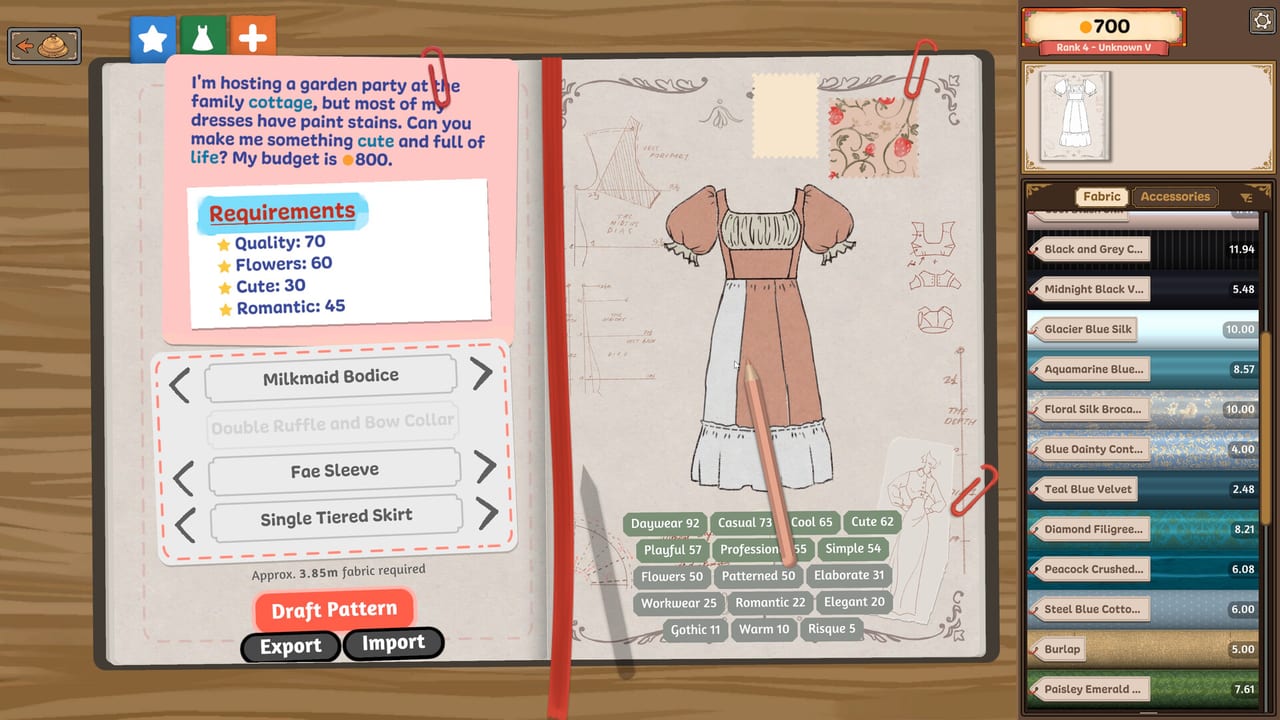
The sketchbook is the cheapest station in Dressmaker and the one players rush. That is backwards. A commission is decided here: whether the dress reads Cute, Elegant, or Professional; whether the neckline suits a library or a ball; whether the fabric samples you pin can actually be bought on this purse. Cutting and sewing only execute the drawing. If the drawing ignores the client, perfect grain will not save you.
Open this page with a brief already heard. If you need the counter logic, use Customers and Commissions. If you need station order, use How to Play. Stay here for pieces, tags, colouring, samples, and the draft button.
Pieces: bodice, neckline, sleeves, skirt, collar
Build from the body out. The bodice is the torso block. A high, closed bodice reads professional. A lower or more decorated bodice can read evening. Neckline is not a sticker; it changes formality as much as sleeve length. Work briefs like coverage. Ball briefs allow more skin and jewellery space.
Sleeves carry a lot of tag information. Long plain sleeves say employed. Puff, flounce, or bare arms shift Cute or glamorous. Prototype 0.5.5 already taught players that some flounce sprites and ruffle names were fiddly; if a sleeve option looks wrong on the mannequin, pick another rather than fighting a known rough edge.
Skirts are the silhouette. Straight and modest for professional day. Volume, tiers, and ruffles for Cute or ball. Collar and neckline finish the face of the garment. If a collar will not take the accessory you had in mind, that is a later accessories problem; do not smash an office collar onto a ball bodice just to park a bow.
Steam’s full catalogue targets 150+ dress pieces. The prototype closet is smaller on purpose. Learn combinations that read clearly, then expect gothic, seasonal, and extra collar options at launch rather than inventing them in 0.5.5.
Style tags and colouring panels
Cute, Elegant, and Professional are not flavour. They are the language the client and the scoring share. If the brief says Professional, every piece you click should still look hireable from across the shop. One Cute ruffle skirt under an otherwise office bodice can break the tag. Elegant wants clean line and usually richer fibre later. Cute can play, but not on a 300-coin library purse.
Colour the panels in the book before you shop. Colouring is a preview of contrast: dark bodice against pale skirt, or a single quiet tone. It is also how you notice that a “clever” two-tone idea needs two bolts you cannot afford. Recolour here. Recolouring after the cut is how leftover piles become junk.
Fabric samples and the draft
Pin fabric samples onto the drawing. Cotton and linen samples belong on professional daywear. Wool reads cooler and more tailored. Silk and velvet samples belong on high-budget elegant or glamorous nights. The fabric ranking is the shopping list that should match those pins. If the sample is velvet and the purse is 300, unpin it.
Lace and sequins expand in the full game. Prototype lace trim exists and is fiddly; treat it as decoration after the garment exists, not as a sketchbook substitute for a missing fibre.
Draft the pattern only when three checks pass: the silhouette matches occasion, the tags match the brief, and the pinned samples match the budget. Drafting too early freezes a bad idea into pieces you will then feel obliged to cut. There is no honour in sewing a sketch you already knew was wrong.
After draft, you are in the physical shop: buy metres, cut on grain, sew, trim. The book’s job is over. If a later mannequin in the Steam version shows a measurement mismatch, that is a full-game fitting step the prototype only hints at. For 0.5.5, trust the drawing, then trust the green outline.
Design habits that survive launch
Name the garment in your head as the client would: “library wool,” “quiet linen,” “ball silk.” If you cannot name it, the tag is muddy. Keep a mental uniform for early professional jobs so you are not reinventing officewear every time. Spend creative ammo on the first 1000-coin-style brief.
When the Steam shop opens on 21 September 2026 with 450+ fabrics and 350+ accessories, the sketchbook still comes first. More choice makes it easier to drift off-brief. Pin samples like a stingy illustrator. Draft like someone who has to cut the thing next. The newspaper will quote the dress you designed, not the dress you meant to design.
Frequently Asked Questions
Quick answers for launch week, the prototype, and the sewing loop.
What order should I pick pieces in the sketchbook?
Bodice and neckline first, then sleeves, skirt, and collar. Check the style tag after each slot so a Cute skirt does not land on a Professional brief.
Do style tags change scoring?
Yes. Delivery reads style match against the client. Tags such as Cute, Elegant, and Professional must agree with Customers and Commissions.
When do I pin fabric samples?
After the silhouette reads correctly and before you draft. Samples should match the purse. Confirm fibres on the fabric ranking.
Should I draft as soon as I like the drawing?
Only when occasion, tags, and samples all pass. Drafting locks the pattern you will cut. Station order is in How to Play.
Where do buttons, bows, and lace get chosen?
Notions are placed after sewing. Plan them here if they affect formality, then place them from the accessories list.
Will the Steam sketchbook have more pieces?
The full game targets 150+ dress pieces plus a much larger fabric and accessory wall. Prototype 0.5.5 is the smaller classroom version of the same slots.